
Zimbabwe Facts
The Zimbabwean Flag
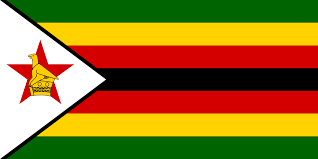
The Zimbabwe Flag is made up of seven stripes, a triangular section containing a star and a stylized bird. The ‘Zimbabwe Bird’ is the national symbol of Zimbabwe. The original birds were found as stone carvings in the ancient ruins of Great Zimbabwe.
The star stands for the political hopes of the country and the white triangle for post-independence peace.
The green stripes represent the land and natural resources, yellow the mineral wealth, red the blood sacrificed during the struggle for independence, and the black in the centre, the people.
Coat of Arms
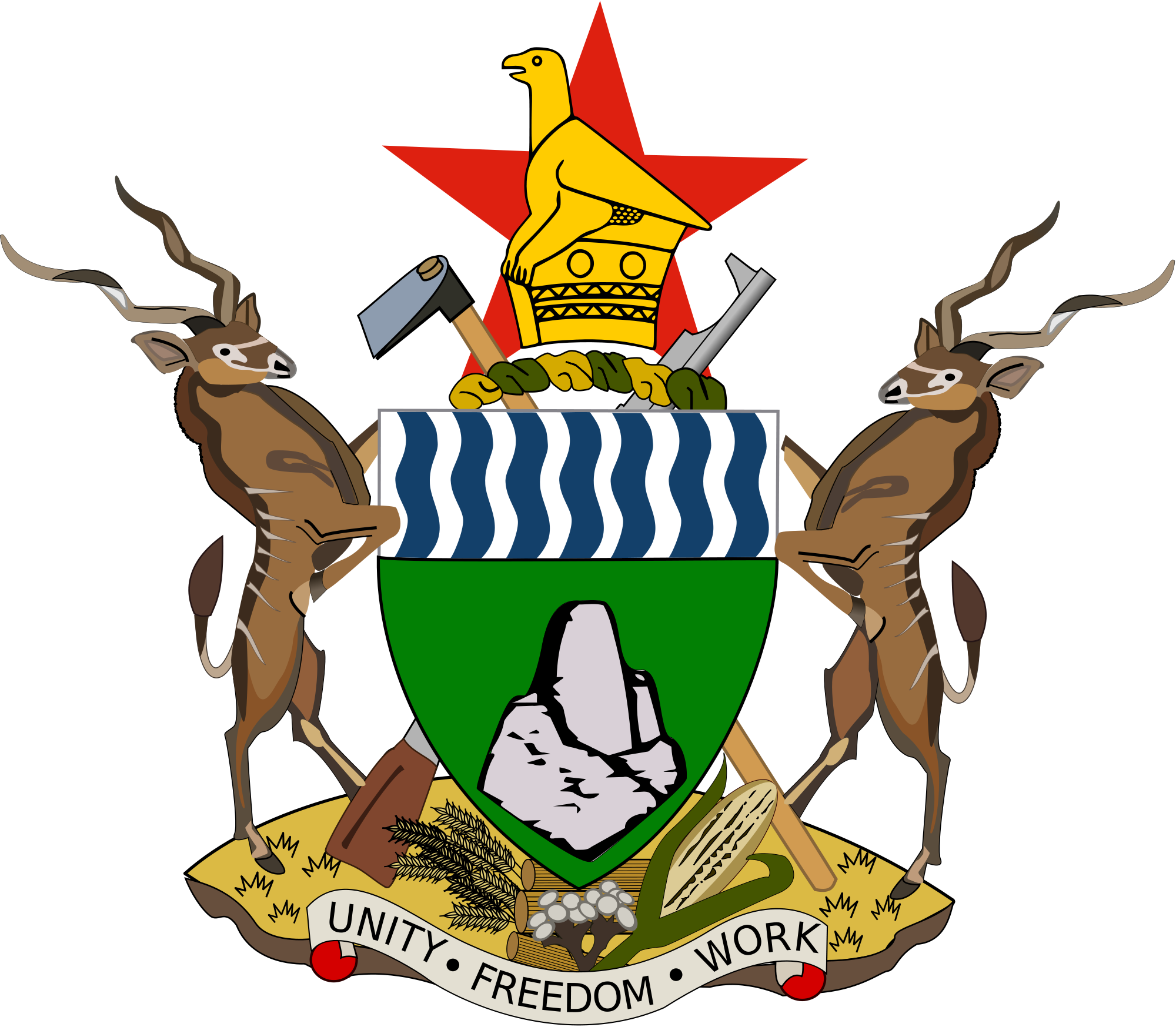
The Coat of Arms depicts two kudus on the left and right, each standing on top of an earthly mound composed of stalks of wheat, a pile of cotton, and a head of maize. At their feet there is also a banner emblazoned with the Zimbabwe national motto (Unity, Freedom, Work). The shield itself is green, featuring 14 waves of alternating white and blue waved lines at top (chief argent), and also at the center of the shield a representation of the ancient Kingdom of Great Zimbabwe is shown. Placed behind the shield are an agricultural hoe (to the left) and an AK-47 automatic rifle (to the right), both of which are tied with twisted strips of green and gold silk. On the crest, the red star and the Great Zimbabwe Bird, which are also depicted in the national flag, are shown.
The meanings of the Zimbabwe Coat of Arms are as follows:
- Kudus: the unity of Zimbabwe’s various ethnic groups
- Earthly Mound: the need to always provide for the Zimbabweans
- Motto Banner: the need to maintain national unity and the preservation of freedom
- Shield: the fertility of the country’s soil and water
- Great Zimbabwe: the historical heritage of the nation
- Hoe and Rifle: Celebrates the struggle for peace and democracy, as well as the proud work-ethic of the Zimbabwean people.
- Strips of Silk: the national financial enterprise and the protection of the economy
- Red Star: hope for the future of Zimbabwe. Conveys the revolutionary nature of the 1980 achievement majority rule, and the struggle towards a fair, equal society.
- Great Zimbabwe Bird: national identity
Quick Facts

Weather
December to March
Normally the rainy season with warm to hot days, mild to warm evenings. Light clothing and rainwear.
April and May
Mainly sunny, warm days with cool to cold evenings. Pack a jersey for the evenings.
June to August
Mild, sunny days but can be distinctly cold in the evenings. A jersey or anorak is strongly recommended.
September
Pleasant sunny days may need a jersey for the evenings.
October to December
Hot sunny days with high temperatures. Nights are warm. Light clothing.ITEMS TO BRING protection against the harsh African sun is advised, as well as khakhi, loose-fitting cool clothing, a hat and sunscreen. Comfortable hiking shoes are essential.
Banking Hours
08:00 - 15:00 Monday to Friday
08:00 - 11:30 Saturday
Currency
Zimbabwe uses the Zimbabwean dollar (ZWL).
Money Wiring Services
Western Union: Available

Telecommunications
Zimbabwe has three cellular network operators through which roaming facilities are available. If you wish to bring your cellular telephone along it is advisable to check with your local cellular provider as to whether or not they have roaming facilities in Zimbabwe.Pay as you go cards are also available from the cellular companies in Zimbabwe.
Transport
FLIGHTS: Domestic flights run between the main cities.
ROADS: Excellent road network.
DOCUMENTATION: IDP (International Drivers Permit) is required and vehicle identification.
BUS: Services are provided in most parts of the country.
RAIL: Daily between the main cities.
Shopping Hours
Monday to Friday 0800 to 1700hrs
Saturday 0800 to 1300hrs
A number of smaller shops stay open until later and many suburban supermarkets are open on Sunday morning. In tourist areas most curio shops or markets are open all day and all week. Throughout Zimbabwe many roadside markets sell hand made curios and carvings with a wide variety to choose from.
Credit Cards
International credit cards are accepted in most hotels, restaurants and shops. Some banks have ATM machines where visitors can use their international credit cards. Please check with your bank if you can use your ATM card in Zimbabwe. Travellers Cheques can be cashed at the bank.

Health Matters
Yellow fever: Vaccination recommended
Prohibited ltems
lndecent film and publications; ammunition, narcotic drugs etc.
Food and Drinks
Piped water in urban areas is considered safe to drink. Normal precautions should be observed with food. All fruit and vegetables should be peeled before consumption.
Electricity
220/240 Volts AC; 50 Hz.
Religions
Majority Christianity; Hindu and Muslim minorities. Traditional beliefs in rural areas.
Airport Departure Tax
Most airlines now include this sum in the price of the ticket; please check if this has been included on your ticket.
